How to Draw Realistic Animal Fur with Coloured Pencils: An Autumn Beginner’s Guide
October is a wonderful month for artists. As the seasons change, we’re surrounded by warm colours, interesting textures and plenty of inspiration for drawing animals.
Foxes, squirrels, woodland birds and other autumn visitors provide the perfect opportunity to practise one of the most important skills in coloured-pencil animal art: creating realistic fur.
If fur has ever felt overwhelming, the key is not to draw every individual hair. Instead, build it gradually by observing the larger shapes, values and direction of the fur.
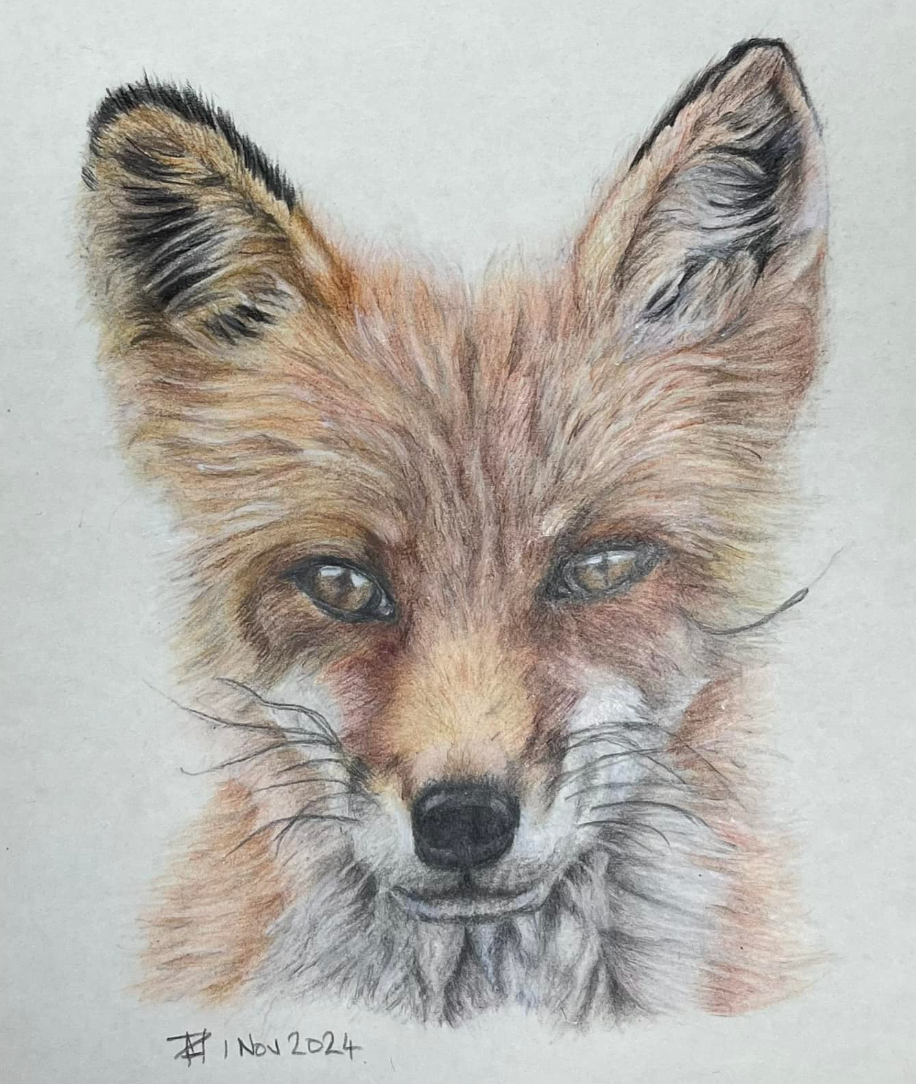
Begin with the direction of the fur
Before adding detail, take a careful look at your reference photo.
Notice how the fur changes direction across the animal’s face and body. Around the nose, cheeks, eyes and ears, it may grow in several different directions.
It can help to imagine the fur divided into small sections. Work on one section at a time, following its natural growth pattern with your pencil strokes. This creates a much more believable result than covering the whole animal with identical lines.

Establish the shapes and values first
It’s tempting to begin with the finest hairs, especially when you’re excited to see the animal come to life. However, those details will be much more effective if the underlying structure is already in place.
Start by identifying:
The lightest areas
The darkest shadows
The main colour shapes
The curves and contours of the animal’s face
The places where one section of fur overlaps another
Use light-to-medium layers to establish these areas before gradually strengthening the contrast. Squinting at your reference can make it easier to see the main light and dark shapes without being distracted by tiny details.
Build colour in gentle layers
Realistic fur usually contains far more colours than we initially expect. Brown fur might include ochres, creams, greys, reds and deep purples as well as traditional brown pencils.
Apply these colours gradually rather than pressing heavily at the beginning. Light layers give you more control and allow the colours to blend naturally on the paper.
Autumn animals are particularly enjoyable to draw because their colouring often reflects the season itself. A fox, for example, may contain warm oranges and earthy browns alongside cooler shadows and pale cream highlights.
Match your pencil strokes to the fur
Different types of fur require different marks.
Short fur can be created using small, controlled strokes that follow the contours of the animal. Long fur benefits from more flowing strokes and overlapping sections. Curly fur is often better approached as a collection of soft shapes, shadows and highlights rather than individual curls.
Varying the length, pressure and direction of your marks will help the fur appear natural. Try to avoid making every stroke identical, as real fur contains plenty of variation.
Short Fur Long Fur Curly Fur
Save the finest details until last
Once the colours, shapes and darker values are established, you can begin adding the details that bring the portrait together.
These might include:
Fine hairs around the face
Highlights within the fur
Whiskers
Small shadows around the eyes and nose
Stray hairs that soften the animal’s outline
Not every hair needs to be drawn. A few carefully placed details can suggest an entire area of texture.
Fox Eye Dog's Nose Cat's Nose
Find inspiration in October
This month, look for seasonal references that make you want to pick up your pencils. You might choose a fox surrounded by autumn leaves, a robin on a branch, an otter beside the water or a close-up study of a feather.
You don’t need to begin with a large, highly detailed portrait. A small fur study, an animal eye or a sketchbook page exploring autumn colours can be just as valuable.
The aim is to observe, experiment and build your confidence one layer at a time.

Inside Pencil Paws Academy, members can explore the Pencil Perfect Foundation Course, including dedicated lessons on short, long and curly fur. The Academy also contains complete animal tutorials, including the fox, robin, timber wolf and the newly completed otter tutorial, so you can see how these techniques are applied throughout an entire drawing.
Want to learn with me inside Pencil Paws Academy?Pencil Paws Academy is moving into its new home, and I’m currently getting everything ready behind the scenes. Join the waitlist and you’ll be one of the first to know when the doors open again.

Comments